Home › About ASCEND ›
Meet the ASCEND Advisory Committee
The ASCEND Advisory Committee comprises science, engineering, and business leaders selected to help maximize our year-round reach and impact and shape the design and content of our centerpiece annual event.
From rockets and payloads to policy, administration, and advocacy, the ASCEND Advisory Committee bring an accumulated wealth of experience — millions of miles and billions of dollars invested in space — to inform and inspire the ASCEND community.

Kevin D. Bell is the senior vice president of the Engineering and Technology Group (ETG) at The Aerospace Corporation. He assumed this position on October 1, 2023. In this role, he is responsible for leading the group which comprises the corporation’s technical and engineering teams that provide support to all national security and civil space programs in the areas of space and launch vehicles, electronics and sensors, computers and software, communications and networking, and systems engineering and architecting. ETG also includes the corporate physical sciences laboratories and the corporate research portfolio.
Previously, Bell was the senior vice president of the Space Systems Group, where he was responsible for the company’s support to all launch programs, ground networks, and satellite programs overseen by the U.S. Space Force Space Systems Command.
Prior to that, Bell was the vice president of Space Program Operations; in that role, he worked directly with the Air Force, government, and industry partners to develop military satellites and to advance national security space systems. Bell oversaw five major mission areas: communications, surveillance, weather, navigation, and space superiority; assisted with the development of system requirements; supported acquisition and development; and solved technical problems to ensure successful operations of space systems.
Bell joined Aerospace in 1992 as a member of the technical staff in the Vehicle Systems Division in ETG. Previously, Bell was general manager of the Imagery Programs Division, National Systems Group, and prior to that he was general manager of ETG’s Systems Engineering Division.
Bell has also supported the Air Force, NASA, commercial ventures, Missile Defense Agency, and the National Reconnaissance Organization customers, serving as systems director of the Space and Directed Energy Technology Directorate; principal director of the Missile Defense Division, Systems and Technology Subdivision; and principal director of Advanced Research and Engineering, Advanced Technology Division, among other increasingly responsible positions within the corporation’s National Systems Group. Prior to joining Aerospace, Bell held positions in industry, academia, and at the NASA Ames Research Center.

Sandra “Sandy” Brown is vice president of Mission Solutions & Payloads (MSP) within Raytheon’s Air & Space Defense Systems (ASDS) strategic business unit. She leads a business responsible for a broad portfolio including Raytheon’s advanced space ground systems enterprise and space payloads, that provides defense, civil and commercial space solutions for domestic U.S. and international markets.
In this role Brown leads the development and deployment of innovative space solutions focused on strategic and tactical space command and control, space protection, tracking and object identification, missile warning and defense, cyber and software solutions, and earth observation and scientific systems.
Since joining the company in 2000, Brown has held numerous positions in program management, engineering, business transformation, and operations management. She led RGNext, a majority-owned joint venture with General Dynamics Information Technology, and has served on the Corporate
Program Management Excellence team. She was also director of the Combat Training Center and Support Mission program area of the Global Training & Logistics (GTL) Mission area within the former Raytheon Intelligence, Information and Services (IIS) business.
Brown was recognized in 2015 with the Raytheon Corporate Program Leadership Award and the IIS Leadership Award. For her career contributions, she was also formally recognized by the White House, First Lady Dr. Jill Biden and former First Lady Michelle Obama, as part of the Joining Forces initiative.

Steve “Bucky” Butow is the Director of the Space Portfolio at the Defense Innovation Unit (DIU). He is a plank-owner & co-founder of the Defense Innovation Unit. As a researcher with the SETI Institute, he worked on instrument concepts for Mars surface soil analysis at NASA Ames Research Center, and was Co-PI on two NASA / USAF airborne science campaigns. He was recognized for outstanding achievement by the Space Science Division in 1999, and received an Ames Honor Award as a member of the first astrobiology mission in 2000. He holds a B.A. in Physics & Astronomy from San Jose State University, M.S. in Air & Space Strategic Studies from the University of Maryland. In his military (reserve) status, he is a brigadier general and commander of the California Air National Guard with more than 3,500 flying hours in Air Force aircraft.

Carissa Bryce Christensen is the Chief Executive Officer and founder of BryceTech, LLC, based in Alexandria, VA. She previously co-founded defense contractor The Tauri Group, acquired by LMI in 2019, and quantum computing software firm QxBranch, acquired by Rigetti Computing in 2019. She is an active tech investor and has served on several early-stage boards.
Ms. Christensen is an internationally recognized expert on the satellite and space industry, known for rigorous analysis and innovative, data-driven strategy. She is a Senior Advisor to the annual US Space Force Schriever Wargame. She serves on the Senior Advisory Council of the Aerospace Corporation Center for Space Policy and Strategy, serves on the World Economic Forum Global Future Council on Space, and chairs the US board of the UN-affiliated Space Generation Advisory Council. She is a founding member of the Future Space Leaders Foundation and chairs its Advisory Board. Ms. Christensen previously served on the National Research Council Space Technology Industry-Government-University Roundtable, which advises NASA, and served on the Space Committee of the Innovation Board.
Ms. Christensen is a Harvard Business School Entrepreneur-in-Residence. She guest lectures at universities including Harvard, the University of Pennsylvania, and the Eisenhower School for National Security and Resource Strategy. She has testified before Congress and Parliament committees on the space industry. She publishes extensively, is often cited by major media outlets, and has appeared in commercial space documentaries by The Financial Times, Bloomberg and HBO.
Ms. Christensen is a graduate of Harvard University’s Kennedy School, where she specialized in science and technology policy. She attended the London School of Economics and was a Douglass Scholar at Rutgers University. She is a Fellow of the American Institute of Aeronautics and Astronautics and of the Royal Aeronautical Society. Ms. Christensen was named 2023 Executive of the Year (Up to $75M) at the Greater Washington GovCon Awards.

Kara Cunzeman is the director of strategic foresight within the Center for Space Policy and Strategy at The Aerospace Corporation. Cunzeman championed and founded the Strategic Foresight directorate at Aerospace and serves as its first director. In her role, Cunzeman leads an “A” team of incredible thinkers who are focused on cultivating a formalized approach to futures thinking through the discipline of strategic foresight, helping the enterprise adequately prepare its organizations and capabilities to proactively shape the future through innovative approaches across strategy, acquisition, science, technology portfolio management, policy, and operations. Cunzeman is an experienced professional who is a recognized, trusted advisor and transformative thought leader for executive leadership across government, academia, and industry. Cunzeman is a declared “mad scientist” by the U.S. Army Training and Doctrine Command (TRADOC), a member of the Federal Foresight Community of Interest, and a frequent guest speaker.
Cunzeman joined Aerospace in 2015, and served five years with Aerospace’s Project West Wing, providing thought leadership and strategic insight into critical issues for the nation spanning global space advancements, technology development, and threat futures to a broad range of customers across Department of Defense, intelligence community, and civil sectors.
Prior to working at Aerospace, Cunzeman held roles in space systems engineering, vehicle operations, and space sensor development at Raytheon and General Atomics. Before that, she was at Packer Engineering, where her contributions were key to winning Phase II funding via a NASA Small Business in Innovation Research (SBIR) award for extracting oxygen from lunar soil.

Debra Facktor is SVP and Head of U.S. Space Systems for Airbus U.S. Space & Defense, Inc., as well as a corporate officer of Airbus U.S. She leads the Airbus U.S. Space line of business, consisting of small satellites, space exploration and space products. Her primary focus is small satellites produced for US government and commercial customers at the company’s state of the art, large scale manufacturing facility in Merritt Island, Florida.
Debra served on the board of the Airbus OneWeb Satellites joint venture prior to its acquisition by Airbus U.S. in January 2024. She also represents Airbus on the board of directors for Starlab Space LLC, a joint venture between Voyager Technologies, Airbus, Mitsubishi, MDA Space, Palantir and other partners to build and operate a next generation commercial space station.
Prior to joining Airbus U.S., Debra was Vice President and General Manager of Strategic Operations for Ball Aerospace (now BAE), leading the company’s Washington D.C. operations, strategic development, and marketing and communications. Her extensive business experience includes two start-up commercial launch vehicle ventures, serving as President and Owner of AirLaunch LLC, and as Vice President of Business Development and Strategic Planning for Kistler Aerospace Corporation. She served as an industry professor at Steven Institute of Technology School of Systems and Enterprises and as Director of Strategic Programs for the Systems Engineering Research Center (SERC). Earlier in her career, Debra was Chief of Moscow Operations for ANSER’s Center for International Aerospace Cooperation.
Debra is actively engaged as a leader, advisor and mentor in the community, including serving as president of the International Women’s Forum Washington DC, on the University of Michigan Aerospace Engineering Industrial Advisory Board, on the advisory board of the Space Generation Advisory Committee (SGAC) and on the board of the Future Space Leaders Foundation (FSLF). She is a fellow of the American Institute of Aeronautics & Astronautics (AIAA), the American Astronautical Society (AAS) and an academician of the International Academy of Astronautics (IAA).
Debra received her bachelor’s and master’s degrees in aerospace engineering from the University of Michigan and is an alumna of the International Space University summer session program in Strasbourg, France.

As the Associate Administrator (AA) for the Science Mission Directorate, Dr. Nicola Fox directs ~100 NASA missions to explore the secrets of the universe–missions that use the view from space to assess questions as practical as hurricane formation, as enticing as the prospect of lunar resources, as amazing as behavior in weightlessness, and as profound as the origin of the universe. She is responsible for fostering an inclusive, welcoming atmosphere and supporting a diverse team of space scientists and engineers around the country. As the AA, Dr. Fox creates a balanced portfolio of carefully chosen missions and research goals to enable a deep scientific understanding of Earth, other planets, the Sun, and the universe. These efforts lay the intellectual foundation for the robotic and human expeditions of the future, while meeting today’s needs for scientific information to address national concerns.
Dr. Fox joined NASA in 2018 as SMD’s Director of the Heliophysics Division, where she led a world-class team in understanding Earth’s most important and life-sustaining star. She oversaw NASA’s work to study key space phenomena and improve situational awareness of the very space our astronauts, satellites, and robotic missions travel through as they explore the solar system and beyond. Her portfolio also included NASA’s robust space weather research to help the U.S. government better predict space weather, which can interfere with radio communications, affect GPS accuracy, and even–when extreme–affect electrical grids on the ground.
Dr. Fox has authored numerous scientific articles and papers, in addition to delivering science presentations worldwide. She is known for her keen ability to make science accessible to a broad range of audiences, as well as her stellar leadership, creating a sense of purpose and belonging in her teams. In 2021 she was awarded the American Astronautical Society’s Carl Sagan Memorial Award for her demonstrated leadership in the field of heliophysics. In 2020 she was awarded NASA’s Outstanding Leadership Medal.
Prior to August 2018, Dr. Fox worked at the Applied Physics Lab at the Johns Hopkins University, where she was the chief scientist for heliophysics, as well as the project scientist for NASA’s Parker Solar Probe–humanity’s first mission to a star. Dr. Fox’s extensive project, program, and supervisory experience included serving as the Deputy Project Scientist for the Van Allen Probes and the operations scientist for the International Solar Terrestrial Physics program.
Dr. Fox graduated from The Imperial College of Science, Technology and Medicine in London with a B.S. in Physics. She received an M.S. in Telematics and Satellite Communications from the University of Surrey. She then returned to Imperial College to complete a Ph.D. in Space and Atmospheric Physics.

Dr. Mike Gazarik Mike Gazarik has over 30 years of experience in the design, development, and deployment of spaceflight systems. Currently he serves as the Faculty Director (Interim) of the Engineering Management Program for the College of Engineering and Applied Science at the University of Colorado in Boulder. He is also a part-time Staff Member at the Johns Hopkins Applied Physics Laboratory in Laurel, MD. He led the creation of the Space Technology Mission Directorate at NASA headquarters and served as the first Associate Administrator championing NASA’s rapid
development and incorporation of transformative technologies that enable the Agency’s missions and address the Nation’s aerospace community’s most difficult challenges. Joining Ball Aerospace in 2015, Mike served over 8 years as the Vice President of Engineering providing overall strategic and operational leadership of engineering, program execution, and technology. He led the organization through an accelerated growth period doubling the size of the organization and company in five years.
Earlier in his career, Gazarik served as the acting director of the Engineering Directorate at NASA’s Langley Research Center and led programs developing an infrared camera for on-orbit shuttle inspections and entry, descent and landing instrumentation for the Curiosity and Perseverance mars missions. Prior to joining NASA, Gazarik served as project manager for the Geosynchronous Imaging Fourier Transform Spectrometer project at the Massachusetts Institute of Technology’s Lincoln Laboratory. Gazarik also worked in the private sector on software and firmware development for commercial and government applications including telecommunications and signal processing.
Gazarik understands that diverse teams develop better solutions. Under his leadership, engineering at Ball Aerospace saw a marked increase in diversity at all levels of the organization. He served as an executive sponsor for the LGBTA and Latinx Ball Resource Networks and is a member of the Society of Women Engineers.
Gazarik earned a B.S. in Electrical Engineering from the University of Pittsburgh in 1987 and was a General Motors Scholar. He earned an M.S. in 1989 and a Ph.D. in 1997, both in electrical engineering, from the Georgia Institute of Technology. He is a Fellow of the AIAA and former Chair of the AIAA Corporate Strategic Committee. He is a member of the Engineering Advisory Board for the University of Colorado’s Engineering College and the Engineering Management Program. Gazarik is a board member for the American Astronautical Society (AAS) and the Space Sciences Institute and formerly for Astroscale U.S., and Astrobotic Technology Inc. He also serves on the NASA Advisory Committee for Technology and Innovation and supported the Department of Defense Study on STEM and the Defense Industrial Base. Gazarik has received numerous awards, including NASA’s Outstanding Leadership Medal, a Silver Snoopy Award, one of NASA’s highest honors, received the 2023 AIAA Rocky Mountain Section Educator of the Year award, selected as the 2023 Engineering Manager of the Year by the American Society of Engineering Management, and was selected as a Distinguished Alumni from the University of Pittsburgh’s Swanson School of Engineering in 2018. He was a leader in Boy Scouts of America, coached and refereed youth lacrosse, and led the development of lacrosse programs in the Hampton Roads area.
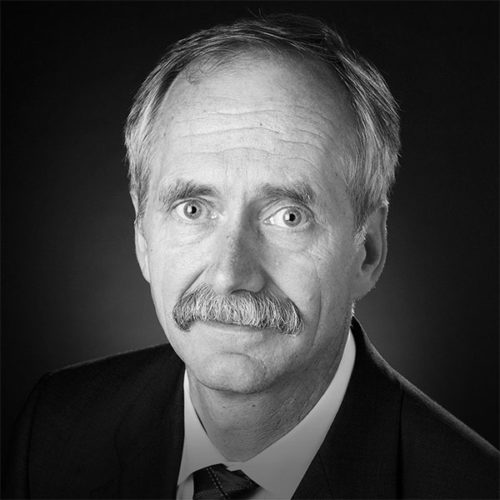
William H. Gerstenmaier is Vice President for Build and Flight Reliability at SpaceX.
Previously, he served as special advisor to NASA’s deputy administrator, appointed to the position in July 2019.
Previously, Gerstenmaier had been the associate administrator for the Human Exploration and Operations Mission Directorate at NASA Headquarters in Washington. In this position, Gerstenmaier provided strategic direction for all aspects of NASA’s human exploration of space and cross-agency space support functions of space communications and space launch vehicles. He provided programmatic direction for the operation and utilization of the International Space Station and its crew; development of the Gateway, Space Launch System and Orion spacecraft; and was providing strategic guidance and direction for the commercial crew and cargo programs.
Gerstenmaier began his NASA career in 1977 at the then Lewis Research Center in Cleveland, performing aeronautical research. He was involved with the wind tunnel tests that were used to develop the calibration curves for the air data probes used during entry on the Space Shuttle.
Beginning in 1988, Gerstenmaier headed the Orbital Maneuvering Vehicle (OMV) Operations Office, Systems Division at the Johnson Space Center. He was responsible for all aspects of OMV operations at Johnson, including development of a ground control center and training facility for OMV, operations support to vehicle development, and personnel and procedures development to support OMV operations. Subsequently he headed the Space Shuttle/Space Station Freedom Assembly Operations Office, Operations Division. He was responsible for resolving technical assembly issues and developing assembly strategies.
Gerstenmaier also served as Shuttle/Mir Program operations manager. In this role, he was the primary interface to the Russian Space Agency for operational issues, negotiating all protocols used in support of operations during the Shuttle/Mir missions. In addition, he supported NASA 2 operations in Russia, from January through September 1996 including responsibility for daily activities, as well as the health and safety of the NASA crewmember on space station Mir. He scheduled science activities, public affairs activities, monitored Mir systems, and communicated with the NASA astronaut on Mir.
In 1998, Gerstenmaier was named manager, Space Shuttle Program Integration, responsible for the overall management, integration, and operations of the Space Shuttle Program. This included development and operations of all Space Shuttle elements, including the orbiter, external tank, solid rocket boosters, and Space Shuttle main engines, as well as the facilities required to support ground processing and flight operations.
In December 2000, Gerstenmaier was named deputy manager, ISS Program, and two years later became manager. He was responsible for the day-to-day management, development, integration, and operation of the space station. This included the design, manufacturing, testing, and delivery of complex space flight hardware and software, and for its integration with the elements from international partners into a fully functional and operating space station.
Named associate administrator for the Space Operations Directorate in 2005, Gerstenmaier directed the safe completion of the last 21 Space Shuttle missions that witnessed assembly completion of the International Space Station. During this time, he provided programmatic direction for the integration and operation of the ISS, space communications, and space launch vehicles.
Gerstenmaier received a Bachelor of Science in aeronautical engineering from Purdue University in 1977 and a Master of Science degree in mechanical engineering from the University of Toledo in 1981. He completed course work early in his career for a doctorate in dynamics and control with emphasis in propulsion at Purdue University, and in spring 2019, he will receive an honorary doctorate from his alma mater.
For his technical contributions and leadership in national and international human spaceflight programs, Gerstenmaier was elected into the 2018 class of the National Academy of Engineering.
Gerstenmaier is the recipient of numerous awards, including three NASA Certificates of Commendation, two NASA Exceptional Service Medals, a Senior NASA Outstanding Leadership Medal, the Meritorious Executive Presidential Rank Award, and Distinguish Executive Presidential Rank Award. He also was honored with an Outstanding Aerospace Engineer Award from Purdue University. Additionally, he was twice honored by Aviation Week and Space Technology for outstanding achievement in the field of space. His other awards include: the AIAA International Cooperation Award; the National Space Club Astronautics Engineer Award; National Space Club Von Braun Award; the Federation of Galaxy Explorers Space Leadership Award; AIAA International Award; the AIAA Fellow; Purdue University Distinguished Alumni Award; and honored at Purdue as an Old Master in the Old Masters Program; recipient of the Rotary National Award for Space Achievement’s National Space Trophy; Space Transportation Leadership Award; the AIAA von Braun Award for Excellence in Space Program Management; and the AIAA von Karman Lectureship in Astronautics.
He is married to the former Marsha Ann Johnson. They have two children.

Kristin Houston is the Chief Executive Officer of Rocketdyne, an independent space technology company with more than 60 years of heritage serving national security space, civil, and commercial customers. Under her leadership, Rocketdyne is helping customers solve today’s space propulsion, space electronics, and power systems challenges while investing in the capabilities they’ll need for the next generation of space missions.
Rocketdyne employs approximately 1,300 people across five principal locations in the United States and builds on more than 60 years of spaceflight heritage and innovation.
Houston became CEO in 2026, and is leading Rocketdyne through one of the most significant moments in its history as an independent company.
She brings more than 25 years of aerospace, aeronautics and defense leadership experience, with a track record of unlocking growth through technical innovation, operational excellence, and trusted customer relationships. Throughout her career, she has led multibillion-dollar businesses, mobilized workforces of nearly 5,000 employees, and managed multisite operations across the United States, Canada, Europe, and Asia.
Her expertise spans propulsion, space power, integrated systems, sensors, missiles, avionics, and advanced manufacturing. She has served national security, civil, and commercial customers including NASA, the U.S. military, global prime contractors, and international allies to advance mission-critical programs and open new markets.
Before becoming Rocketdyne’s CEO, Houston served as the President of L3Harris’ Space Propulsion & Power Systems sector. In that position, she spearheaded business strategy, financial performance, operational execution, and growth across launch propulsion, in-space propulsion, and power systems. Prior to that, Houston was the President of the Electro-Optical sector within the Integrated Mission Systems segment, where she led a diverse $1.5B portfolio across multiple divisions, sites, and countries.
Earlier in her career, Houston spent 16 years at Boeing, where she held leadership positions and played a pivotal role in advancing engineering and program management across multiple large-scale programs. Her leadership roles included Vice President and Program Manager for Tiltrotor programs, Vice President and Chief Engineer for Vertical Lift, and Director of International Apache programs.
Houston holds a Bachelor of Science degree in chemical engineering from the University of Pennsylvania and an Executive MBA from Villanova University with Beta Gamma Sigma honors.
Houston is an Associate Fellow of the American Institute of Aeronautics and Astronautics and serves as a board member for the Marine Corps Heritage Foundation and Coalition for Deep Space Exploration. The Philadelphia Business Journal named Houston to its 40 Under 40 Class of 2018. She is also an avid runner, cyclist, and triathlete.
Kristin Houston is the Chief Executive Officer of Rocketdyne, an independent space technology company with more than 60 years of heritage serving national security space, civil, and commercial customers. Under her leadership, Rocketdyne is helping customers solve today’s space propulsion, space electronics, and power systems challenges while investing in the capabilities they’ll need for the next generation of space missions.
Rocketdyne employs approximately 1,300 people across five principal locations in the United States and builds on more than 60 years of spaceflight heritage and innovation.
Houston became CEO in 2026, and is leading Rocketdyne through one of the most significant moments in its history as an independent company.
She brings more than 25 years of aerospace, aeronautics and defense leadership experience, with a track record of unlocking growth through technical innovation, operational excellence, and trusted customer relationships. Throughout her career, she has led multibillion-dollar businesses, mobilized workforces of nearly 5,000 employees, and managed multisite operations across the United States, Canada, Europe, and Asia.
Her expertise spans propulsion, space power, integrated systems, sensors, missiles, avionics, and advanced manufacturing. She has served national security, civil, and commercial customers including NASA, the U.S. military, global prime contractors, and international allies to advance mission-critical programs and open new markets.
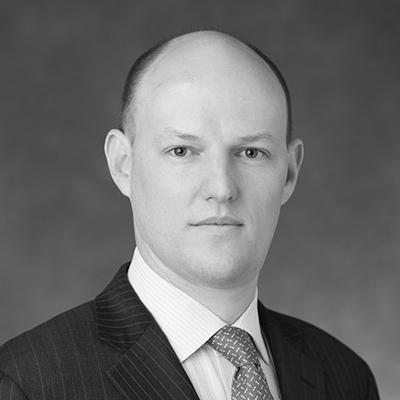
Phillip (Phil) Ingle is a Managing Director in Morgan Stanley’s Investment Banking Division. He joined Morgan Stanley in 2002 as an Analyst in the firm’s Melbourne, Australia, office. In 2004, he relocated to the New York office where he joined the Global Industrials Group. Phil specializes in the coverage of Aerospace & Defense, General Industrial and Security companies and has worked on a variety of M&A and capital markets transactions for clients across these industries.
Notable space-related transactions include the sale of Ball Aerospace to BAE Systems, the IPO of MDA, the SPAC merger of Rocket Lab with Vector Acquisition Corp, Harris Corporation’s acquisition of Exelis and its merger-of-equals with L3 Technologies, and debt and equity financings for several commercial and government-customer focused space companies including Virgin Galactic, Maxar and Aerojet Rocketdyne.
Phil graduated from the University of Melbourne with a Bachelor of Commerce (Hons) and a Bachelor of Laws (Hons). During and after his five years at university, he served as an Infantry Officer in the Australian Army Reserve. Phil currently resides in Brooklyn, NY, with his wife Laura and their four daughters.

Dr. Dave Kaufman is the president of Space & Mission Systems division, within the Aerospace & Mission Systems (AMS) segment at BAE Systems, Inc. Kaufman is responsible for the division’s operations across a broad portfolio of spacecraft, instruments, ground systems, sensors, tactical systems, operations, data analytics and more.
Previously, Kaufman was a senior vice president for Ball Corporation and the president of Ball Aerospace, a wholly owned subsidiary of Ball Corporation that was acquired by BAE Systems, Inc. Kaufman has served in numerous leadership roles within the Space & Mission Systems division, including chief operating officer and vice president and general manager of the division’s business area focused on delivering space system solutions to the defense and intelligence communities.
During his three-decade industry career, Kaufman has served in leadership positions for a variety of space system programs including DARPA’s Orbital Express NEXTSat/CSC and the U.S. Air Force Space Test Program Standard Interface Vehicle. He began his aerospace career as a thermal engineer at Hughes Space & Communications Co. in El Segundo, California, and was awarded two patents for his research and development work.
Kaufman is an Associate Fellow of the American Institute of Aeronautics and Astronautics and previously served with the National Space Council Users’ Advisory Group (UAG) from 2023 to 2024.
He received a B.S. in mathematics from Willamette University, a B.S. degree in mechanical engineering from Stanford University, and an M.S. and Ph.D. in mechanical engineering from the California Institute of Technology.
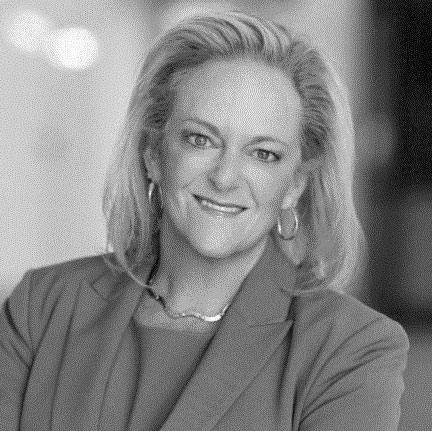
Tonya Ladwig is currently the vice president for Lockheed Martin Space Engineering and Technology (E&T) leading the exceptional engineers who advance our cutting edge technology to deliver on our commitments to our customers in support of their most critical missions.
Previously Tonya served as acting vice president for Ignite within Space, where she was responsible for leading the team that pushes the boundaries of possibility, performs critical research and ultimately develops ground-breaking hardware and software for internal and external customers.
Tonya was previously vice president and deputy general manager for the Commercial Civil Space (CCS) line of business at Space. In this capacity she led the execution of programs for human and robotic deep space exploration, weather and remote sensing and other cutting-edge technologies. Prior to that she was vice president, Human Space Exploration & Orion Program Manager within CCS, responsible for delivering the Integrated Crew and Service Module for Artemis, as well as vice president, Navigation Systems, within National Security Space.

Professor, RAND School of Public Policy | Adjunct Professor, Georgetown University
Former Associate Administrator for Technology, Policy, and Strategy, NASA
Bhavya Lal is a nuclear engineer and space strategist who has worked on national space policy from three positions: as an analyst advising the White House and federal departments and agencies, as a transition adviser helping set a new administration’s space agenda, and as the NASA official responsible for carrying decisions through the agency.
She served on the 2020 Presidential Transition Agency Review Teams for NASA and the Department of Defense, where she helped develop agency priorities for space and co-wrote memos on continuing the Space Force and the National Space Council. In the first 100 days of the Biden administration she was the agency’s senior administration appointee and Acting Chief of Staff, and led decisions including the continuation of the Artemis Moon-to-Mars program. She also led the Office of Technology, Policy, and Strategy as Associate Administrator and was the first woman to serve as NASA’s Acting Chief Technologist. Under her leadership, the office conducted cost-benefit studies of emerging technologies and applications, addressed policy issues on cislunar activity, the International Space Station extension and replacement, in-space servicing, assembly, and manufacturing, and drove NASA’s space sustainability strategy.
Before NASA she spent 15 years at the Institute for Defense Analyses’ Science and Technology Policy Institute, where she led the institute’s space portfolio. Her analysis underpinned National Security Presidential Memorandum-20, the first major update to U.S. nuclear launch safety policy in more than 40 years. She testified before the National Space Council in 2018 and before the House Science Committee in 2018, 2019, and 2021. Her studies also reset working assumptions about the timeline for a human Mars landing, the prospects for private space stations, and the size of the space economy.
In 2025 she co-authored a report on a national strategy for space nuclear power and propulsion. NASA’s Fission Surface Power directive, issued weeks after its release, closely tracks the report’s recommended scope, power level, timeline, and contracting model. She also co-authored the Department of Energy’s 2026 assessment of the U.S. space reactor industrial base.
Dr. Lal holds bachelor’s and master’s degrees in nuclear engineering and a second master’s degree in technology and policy from MIT, and a Ph.D. in public policy and public administration from George Washington University. She chairs the International Astronautical Federation’s Space Economy Committee, consults for the Jet Propulsion Laboratory and Idaho National Laboratory, has served on six National Academies committees, and is an Academician of the International Academy of Astronautics and an Associate Fellow of AIAA. Her honors include the NASA Distinguished Service Medal (the agency’s highest honor), the 2025 AIAA Public Service Award, the RAND Edwin E. and Mary T. Huddleson Excellence in Teaching Award, and induction into the YWCA Academy of Women Achievers.

Joe Landon is CEO & Co-Founder of Rendezvous Robotics, which is building a new category of high-performance spacecraft that launch as compact tiles and autonomously self-assemble in orbit. This first-of-its-kind technology makes it possible to build beyond the dimensions of a rocket fairing and to expand, upgrade, or reconfigure a spacecraft without replacing the entire system.
Previously, Joe was CEO of Crescent Space, a Lockheed Martin subsidiary building commercial communications and navigation services for lunar missions. He also served as Vice President of Advanced Programs Development at Lockheed Martin Space, where he led R&D, strategy and business development for the company’s multibillion-dollar Commercial Civil Space portfolio. Earlier in his career, he was CFO of Planetary Resources, a pioneering commercial space company that helped catalyze private-sector interest in asteroid mining and space resources.
Joe is an Associate Fellow of AIAA and a member of the International Academy of Astronautics. He holds an undergraduate degree in Engineering Physics from Embry-Riddle Aeronautical University, a master’s degree in Aerospace Engineering from the University of Southern California, and an MBA from Harvard Business School.

Dr. Martin joined Astroscale U.S. in August 2019 as Executive Vice President. She brings many years of experience in space technology management, operations, and engineering to support the foundation and growth of Astroscale U.S.
Dr. Martin previously held the position of the Director, Orbital Solutions at General Atomics Electromagnetic Systems (GA-EMS). She was responsible for the management and technical performance of the engineering staff and delivery of projects, including planning and managing technical and programmatic solutions to ensure quality, business, and financial objectives were met.
Prior to joining GA-EMS, Dr. Martin was the Chief Operating Officer at Surrey Satellite Technology US, where she led the Surrey project management and engineering teams. As a member of the Surrey Satellite US Executive Team, Dr. Martin managed the bidding, negotiation, and execution of projects, and was responsible for ensuring the company’s cost-effective methods were appropriately applied to the execution of programs.
Dr. Martin transferred to Surrey Satellite US from Surrey Satellite Technology Ltd. in the United Kingdom, where she held several positions including the Head of Telecommunications and Navigation business unit, encompassing the Galileo payload programme. Prior to Surrey, Dr. Martin was a Project Manager and Scientist at QinetiQ.
Dr. Martin earned a Master of Science in astrophysics and a Doctorate in mathematics and computational sciences from the University of St. Andrews in Scotland. She loves to explore and adventure the mountains in Colorado.

Rob Meyerson is the co-founder and CEO of Interlune, a company committed to sustainable and responsible harvesting of natural resources from space to benefit humanity. Rob is an angel investor, advisor, and/or director for companies including Sceye, Starfish Space, Hermeus, Hadrian, Axiom Space, nlx, and others.
Prior to Interlune, Rob was the President of Blue Origin, and grew the company from its founding into a more than 1500-person organization between 2003 and 2018. Prior to joining Blue, Rob was a Senior Manger at Kistler Aerospace, and he began his career as an aerodynamicist at NASA’s Johnson Space Center (JSC) working on the Space Shuttle and Space Station programs.
Rob earned a B.S. degree in aerospace engineering from the University of Michigan and a master’s degree in industrial engineering from the University of Houston. He is an AIAA Fellow, a Trustee of the Museum of Flight in Seattle and a member of the University of Michigan College of Engineering Leadership Advisory Board. For accomplishments at Blue Origin, Rob and his team were awarded the Robert J. Collier trophy from the National Aeronautic Association in 2016, and Rob was awarded the Space Flight Award by the American Astronautical Society in 2017.

Updated bio coming soon.

Todd J. Mosher, Ph.D., is the Associate Director for Graduate Education and a Scholar in Residence in the Lockheed Martin Engineering Management Program at the University of Colorado at Boulder. He is a strategic leader with 36 years of aerospace engineering and program management experience on human spaceflight, satellite, and launch vehicle programs. As an entrepreneurial leader, Dr. Mosher helped one small company go public and assisted two others in exiting to an acquisition. He led and authored successful proposals resulting in over $5B in opportunities from defense, civil, and commercial space customers. Dr. Mosher has taught at four universities, with the University of Coloradobecoming the fifth. He was a NASA astronaut finalist in 2008 and a Presidential Leadership Scholar in 2024.
Dr. Mosher has a Ph.D. and M.S. in aerospace engineering from the University of Colorado, an M.S. in systems engineering from the University of Alabama in Huntsville, and a B.S. in aerospace engineering from San Diego State University. He has been an AIAA member since 1987 and is serving his second consecutive term on the AIAA Board of Trustees. AIAA has given him opportunities for professional growth as a student, author, speaker, leader, advisor, and awardee with a diverse range of experiences working throughout the organization. Dr. Mosher a first-generation college graduate and a fourth-generation Coloradan.

Since joining the German Aerospace Center (DLR) in 2012 Oliver Pape held various leadership positions in research-administration and corporate development. Currently he is business and innovation manager at the Institute of Systemarchitectures in Hamburg, Germany. From 2019 to 2023 he was deployed to DLR’s Office in Washington D.C. promoting international relations with partners in US and Canada. Until moving to D.C. he headed a department for system analysis and the general administration services within other DLR institutes. Oliver is a certified auditor for environmental and quality management systems. On behalf of DLR’s central quality department he conducts internal audits at different institutes and corporate departments all over DLR.
From 2000 to 2012, Oliver worked within the Lufthansa Technik Group (LHT), mainly in business development and training operations for aircraft MRO, and has been advisory board member of LHT subsidiaries in UK and Taiwan.
Starting in 1987 during his 12-year term as a career officer, with included posts on war-ships, staff functions in HR management and eventually being an instructor at the German Naval Academy. Oliver studied aerospace technology at the University of Armed Forces in Munich Staying a reserve officer after his active career he regularly returns back to duty at the German Naval Headquarter and is part of the military attaché reserve pool, which demands short-term engagements at German embassies worldwide. In addition to his master degree in Aerospace Technology, Oliver holds a master degree in environmental science from the University of Rostock and an MBA from the University of Muenster.
The Pape family lives near Hamburg. Oliver is a passionate volunteer at the Federal German Agency for Technical Relief (THW.de), which provides help in the wake of natural disasters, accidents and other emergencies, His wife Stephanie is a public health consultant and member of the German Navy Medical Reserve Corps. She occasionally serves as a volunteer on hospital ships in Africa for mercyships.com.
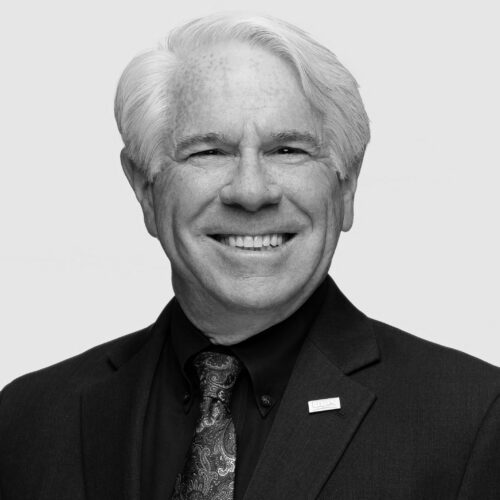
John Reed is United Launch Alliance’s Chief Rocket Scientist. In this role Reed focuses on a wide variety of initiatives including launch vehicle reuse, upper stage enhancements and trajectory planning, defining ULA’s next generation capabilities and fostering a culture of innovation and Intellectual Property protection. Additionally, he manages ULA’s Technical Fellows program which brings strategic focus to key technology areas of the enterprise. Reed is an industry veteran, collaborating on initiatives to shape and enable digital engineering and emerging markets.
Reed has been working on various launch vehicles since 1982. He is a long-time member of the American Astronautical Society (AAS) and as an American Institute of Aeronautics and Astronautics (AIAA) Associate Fellow he is actively engaged in AIAA task forces, the ASCEND event and AAS GN&C Conference as well as providing space-focused thought leadership. Reed received his Bachelor of Science degree in aerospace engineering from the Missouri University of Science and Technology and Master of Science degree in computer science from the University of Colorado-Boulder.

Pat Remias is the Vice President of Space Systems Development at Blue Origin, a private space company working to radically reduce the cost of access to space and harness its vast resources for the benefit of Earth. With over 38 years of executive, engineering, and program management experience in DoD, NASA, commercial, and international aerospace programs, Pat is a seasoned aerospace executive dedicated to innovation.
Pat joined Blue Origin in 2022 as the Vice President of Space Destinations. In 2023, Pat was appointed Vice President of Space Systems Development, where she leads the research and development group, ideating and formulating new projects and programs in Commercial LEO Development, Lunar Mobility and Habitats, In-Situ Space Resources (ISRU) and Space Nuclear areas, among others.
Prior to Blue Origin, Pat was at Sierra Space, where she was responsible for complete engineering infrastructure supporting SNC’s Sierra Space subsidiary, developing innovative solutions to the nation’s most challenging space missions in civil and national security space. She also held positions at ComTech Aeroastro Inc., Emergent Information Technologies, Inc., and Orbital Sciences Corporation.
Pat has a bachelor’s degree in aerospace and ocean engineering (AOE), Virginia Polytechnic Institute and State University (Virginia Tech) and a graduate certificate in engineering management at The Catholic University of America.

Lauren Smith is a program manager for the Satellite Servicing operating unit within the Tactical Space Systems division of Northrop Grumman Space Systems. In this role, Smith leads the portfolio of programs that advance the future of in-space refueling.
Smith has served in multiple, diverse air and space roles across her career at Northrop Grumman. She was recently the operations manager for a portfolio of 13 ground and data processing programs as well as the chair of the company’s first-ever Systems and Software Engineering Symposium. Smith was also the mechanical test engineering manager for the James Webb Space Telescope (JWST) and a member of the JWST integration and test senior staff as the lead for non-explosive actuators and deployments. As a program manager in Resilience and Rapid Prototyping, NG Next, and Advanced Unmanned Systems, Smith has executed numerous programs and contributed to several strategic captures.
Before joining Northrop Grumman, Smith worked at NASA Glenn Research Center in the Simulated Lunar Operations Lab. She also conducted her thesis work at Glenn, specializing in mechanisms and robotics. This work contributed to being named one of Aviation Week’s Twenty20s.
Smith currently serves on both the Space Foundation and Case Alumni Association board of directors, as well as the industry advisory board for her alma mater’s mechanical and aerospace engineering departments. She is a member of the AIAA ASCEND Guiding Coalition, serves on two committees for the International Astronautical Foundation, and has held numerous leadership roles for the Space Generation Advisory Council. Smith has also been recognized as a Future Space Leader Grant winner.
Smith holds a bachelor’s degree in aerospace engineering, bachelor’s and master’s degrees in mechanical engineering, and a minor in political science from Case Western Reserve University.
Northrop Grumman is a technology company, focused on global security and human discovery. Our pioneering solutions equip our customers with capabilities they need to connect, advance and protect the U.S. and its allies. Driven by a shared purpose to solve our customers’ toughest problems, our 90,000 employees define possible every day.

Matthew Weinzierl
Senior Associate Dean and Chair, MBA Program; Joseph and Jacqueline Elbling Professor of Business Administration, Harvard Business School
Matt Weinzierl is Senior Associate Dean and Chair of the MBA Program at Harvard Business School and a Research Associate at the National Bureau of Economic Research. His research focuses on the optimal design of economic policy, in particular taxation. Since 2016, he has launched a set of research projects on the commercialization of the space sector and its economic implications. Prior to completing his PhD in economics at Harvard University in 2008, Professor Weinzierl served as the Staff Economist for Macroeconomics on the President’s Council of Economic Advisers and worked in the New York office of McKinsey & Company.

Darren Woodman is Strategic Technologies and Partnerships Leader at RTX, where he leads strategy, business capture, and global partnerships for advanced space and maritime systems. He works across the national security and civil enterprise, engaging organizations such as AFRL, DARPA, NASA, and DON to advance technologies that support U.S. space and maritime leadership. He holds a Top Secret clearance, is a named inventor on multiple patents, and brings extensive experience in P&L responsibility, capture management, and technology transition for satellite and space systems. Darren is a long-time supporter of the space community and is active in industry and university forums that advance collaboration between government, industry, and research institutions.

Updated bio coming soon.